

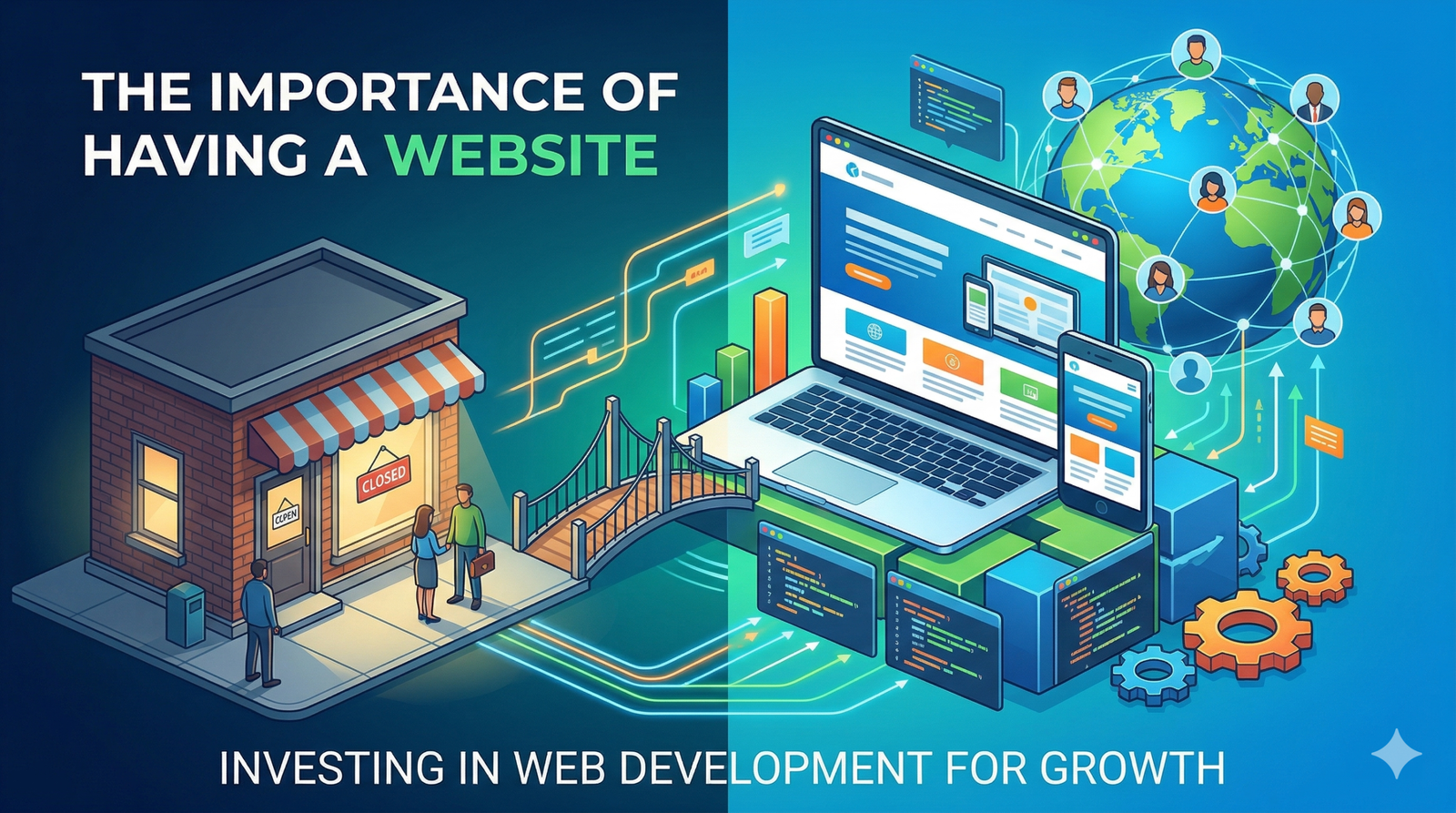
In today’s digital-first world, your website is often the first place people interact with your brand. Before they call, visit, or buy, they usually search online. If they cannot find a professional, trustworthy website, many will move on to a competitor.
That is why having a website is no longer optional for most businesses. It is a core business asset — and strong web development is what turns that asset into a growth engine.
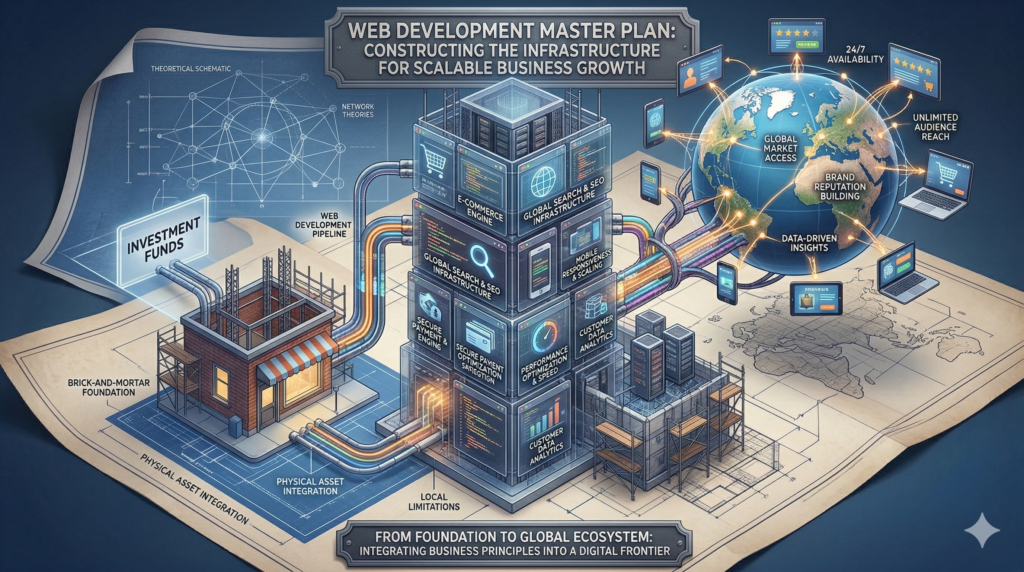
Why Having a Website Matters
A website does far more than “put your business online”. It helps you build visibility, trust, and revenue in one place.
1) Your website is your digital storefront
Whether you run a local service, an e-commerce brand, or a consultancy, customers expect to find you online. A website gives people instant access to:
- Who you are
- What you offer
- Your pricing or service details
- Testimonials and case studies
- How to contact or buy from you
Without this, potential customers may question your credibility.
2) It builds trust and professionalism
A polished, easy-to-use website signals that your business is legitimate and established. Features that strengthen trust include:
- Professional branding and design
- Clear messaging and service pages
- Customer reviews and social proof
- Secure browsing (HTTPS)
- Transparent contact details
First impressions happen quickly online. A dated or confusing site can lose trust in seconds.
3) It gives you 24/7 visibility
Unlike physical locations or office hours, a website works around the clock. Visitors can discover your business, read about your services, and submit enquiries at any time.
That means your website can generate leads and sales while you sleep.
4) You control your brand message
Social media platforms are useful, but you do not control their algorithms or policies. Your website is a channel you own. You decide:
- The user journey
- The brand experience
- The content and calls to action
- How leads and customer data are collected
Owning your platform protects your marketing from sudden platform changes.
5) It supports SEO and long-term traffic growth
A website lets you publish content that ranks in search engines. Over time, pages and blog posts can bring in consistent organic traffic from people already searching for what you do.
This creates compounding value: one well-optimised page can generate enquiries for months or even years.
Why Web Development Is Just as Important as Having a Website
Having a website is the first step. Good web development determines whether your site actually performs.
A beautiful site that is slow, broken on mobile, or hard to navigate will still lose customers.
1) Better user experience (UX)
Web development shapes how users move through your site. Fast load times, intuitive navigation, and clear page structure reduce friction and increase conversions.
When users can quickly find answers and take action, results improve.
2) Mobile responsiveness is essential
Most users now browse on mobile devices. If your site is not responsive, visitors will leave. Strong development ensures your website works smoothly across:
- Smartphones
- Tablets
- Laptops and desktops
- Different browsers and screen sizes
Mobile usability is not a bonus feature — it is a baseline requirement.
3) Website speed affects conversions
Slow websites cost money. Even a few seconds of delay can increase bounce rates and reduce leads or sales.
Web development improves speed through:
- Clean, efficient code
- Compressed images and files
- Caching and performance optimisation
- Reliable hosting setup
A faster site creates a better experience and stronger commercial outcomes.
4) SEO performance depends on technical quality
Technical web development directly impacts search rankings. If search engines cannot crawl and understand your website properly, even great content may struggle to rank.
Development supports SEO through:
- Clean site architecture
- Proper heading structure
- Optimised metadata
- Schema markup
- XML sitemaps
- Fixing crawl errors and broken links
Content and technical health must work together.
5) Security protects your business and users
A secure website protects customer data, payments, and brand reputation. Developers help reduce risk by implementing:
- SSL certificates (HTTPS)
- Secure authentication and admin access
- Plugin and software updates
- Vulnerability monitoring
- Backups and recovery systems
A security incident can damage trust quickly. Prevention is always better than repair.
6) Scalability for future growth
As your business grows, your website should grow with it. Good development makes it easier to add:
- New services or product lines
- Booking systems or client portals
- CRM and marketing integrations
- Multi-location or multilingual pages
- Advanced analytics and automation
Building with scalability in mind saves costly rebuilds later.
Business Benefits of a Well-Developed Website
When strategy, design, and development align, your website becomes a high-performing business tool.
Key outcomes include:
- More qualified leads
- Higher conversion rates
- Improved customer trust
- Stronger search visibility
- Better marketing ROI
- Easier operations and automation
In short: a well-developed website does not just “look good” — it drives measurable growth.
Common Mistakes to Avoid
Many businesses underperform online because of avoidable issues:
- Treating the website as a one-time project
- Prioritising design over functionality
- Ignoring mobile and speed optimisation
- Using unclear calls to action
- Publishing thin or outdated content
- Skipping technical SEO and security maintenance
Your website should be reviewed and improved continuously, just like any other core business system.
Practical Next Steps
If you want your website to deliver stronger results, start with these actions:
- Audit your current site for speed, UX, mobile performance, and SEO
- Clarify your core conversion goals (enquiries, calls, sales, bookings)
- Improve key pages first (Home, Services, About, Contact, Landing Pages)
- Strengthen technical foundations (security, performance, indexing)
- Build an ongoing content and optimisation plan
Small, consistent improvements often outperform large, infrequent redesigns.
Final Thoughts
Having a website is essential for credibility, discoverability, and customer acquisition. But simply “being online” is not enough. The real advantage comes from professional web development that makes your site fast, secure, user-friendly, and built to convert.
If your website is where first impressions happen, web development is what ensures those impressions become enquiries, sales, and long-term business growth.
Want a website that drives leads, not just visits?
- Technical website audit and performance review
- UX and conversion journey mapping
- Conversion-focused page structure and copy guidance
- Mobile-first, speed-optimised development
- SEO-ready build foundations (technical setup, structure, and indexing)
- Monthly reporting tied to real KPIs and lead quality

What Happens When Strategy Meets Precision? Results.
Learn how our tailored, tech-forward campaigns drive growth for SaaS and B2B companies. From automation to acquisition, devising strategy, engineering growth and retention we optimise every touchpoint.