A Strategic Guide for Stakeholder Alignment
In the modern B2B landscape, the “lone wolf” decision-maker is a myth. Today, B2B purchasing is a team sport—and the team is getting bigger. According to Gartner, the average B2B buying group for a complex solution involves six to ten stakeholders.
This guide provides a tactical playbook for mapping the B2B buying committee and ensuring your solution is not just seen, but championed.
1. Defining the Players: Who is on the Committee?
Before you can align a committee, you have to identify who is sitting at the table. Most B2B buying groups consist of six predictable personas:
| Persona | Primary Goal | Your Strategic Task |
| The Champion | Solve an operational problem and look like a hero. | Arm them with internal decks and ROI data to sell for you. |
| The Economic Buyer | Ensure strategic alignment and clear ROI. | Focus on business outcomes and long-term value. |
| The Technical Buyer | Verify integration, security, and scalability. | Provide deep technical documentation and SOC2 certifications. |
| The User | Ease of use and daily productivity. | Focus on UX/UI and training to reduce frontline pushback. |
| The Influencer | Protect their own department’s goals. | Understand and address their “unspoken” objections early. |
| The Procurement/Legal | Minimize risk and secure best possible terms. | Be organized, transparent, and responsive with paperwork. |
2. Moving Beyond the Single Point of Contact
A common mistake in B2B sales is “single-threading”—relying entirely on one contact to push a deal through. To avoid this, you must implement multi-threading: the process of building relationships with multiple stakeholders simultaneously.
Strategies for Effective Multi-Threading:
- Executive Mapping: Connect your executives (CEO to CFO, etc.) to build high-level peer trust.
- Persona-Specific ABM: Use targeted content tracks, such as security whitepapers for Technical Buyers and case studies for Economic Buyers.
- Continuous Discovery: Run a mini-discovery session every time a new person joins the committee to understand their specific success metrics.
3. Creating Alignment: Bridging the Gap
The biggest challenge in B2B sales isn’t another vendor; it is indecision. When six people cannot agree, the default answer is “do nothing”.
Pro Tip: Identify friction points early. Ask your Champion: “Who else needs to weigh in, and what is the one thing they usually hate about new software?”.
The “Common Ground” Value Proposition
You need one “North Star” value proposition that addresses multiple needs at once:
- Example: “Our platform reduces operational costs by 20% (Economic) while automating 10 hours of manual data entry per week (User) via a secure, SOC2-compliant cloud integration (Technical).”
4. SEO and Keyword Best Practices
To attract these committees through content, optimize for intent-based keywords throughout the funnel:
- Awareness (TOFU): Focus on “How to [Solve Problem]” or “The Future of [Industry]”.
- Consideration (MOFU): Use keywords like “B2B Buying Committee Guide” or “Stakeholder Alignment Strategies”.
- Decision (BOFU): Target high-intent terms like “ROI of [Product]” or “Implementation Timeline”.
5. From Vendor to Strategic Partner
Mapping the buying committee is about understanding human psychology within a corporate structure. When the committee feels heard and individual risks are mitigated, the path to “Yes” becomes significantly shorter.
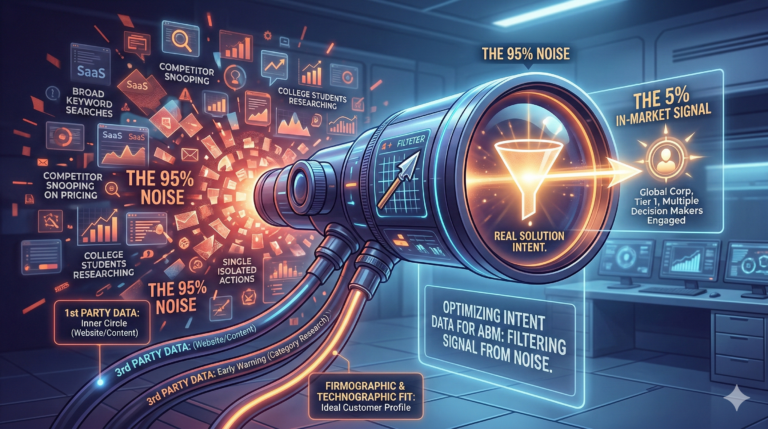
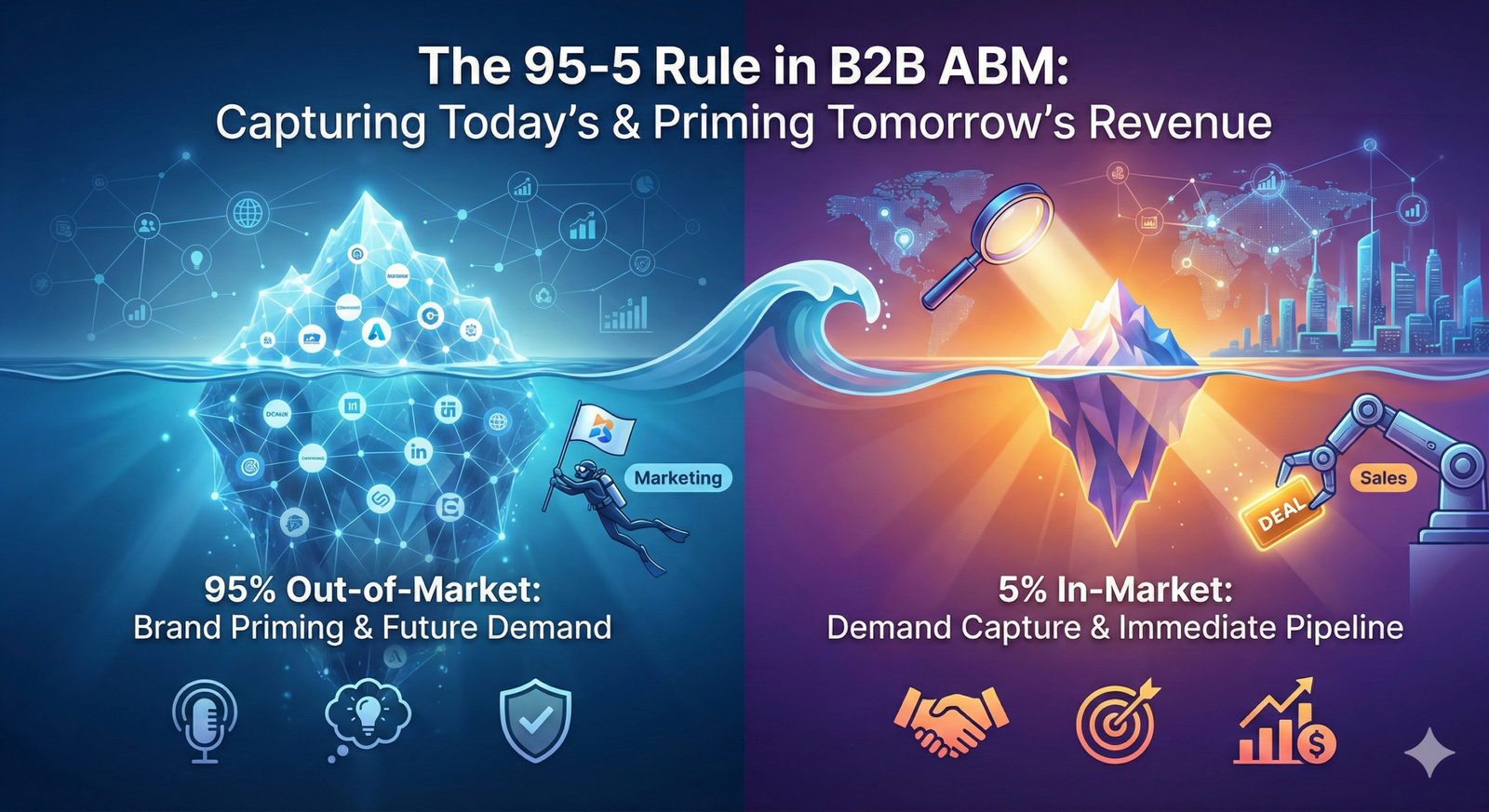
Don’t leave 95% of your market to your Competitors.

What Happens When Strategy Meets Precision? Results.
Learn how our tailored, tech-forward campaigns drive growth for SaaS and B2B companies. From automation to acquisition, devising strategy, engineering growth and retention we optimise every touchpoint.