
In the world of B2B sales, there is nothing more frustrating for a representative than a “cold” outreach that feels like shouting into a void. Conversely, there is nothing more powerful than a “warm” entry—knowing exactly what a prospect is thinking before they even pick up the phone.
This is the promise of Account-Based Marketing (ABM), but it only works if the Sales team is actually enabled to use the data. Without proper sales enablement, intent data is just a collection of confusing charts in a dashboard that Sales never opens. To achieve true ABM sales and marketing alignment, Marketing must transform “raw data” into “actionable intelligence.”
This guide explores how to build a sales enablement engine that equips your reps with the “warm” intent insights they need to win.
The Intent Gap: Why Data Isn’t Enough
Most ABM programs fail not because they lack data, but because that data stays trapped in Marketing’s silos. If Marketing sees that a Tier 1 account is researching “competitor migration,” but the Sales rep is still sending generic “intro” emails, the opportunity is wasted.
To bridge this gap, your ABM sales and marketing alignment guide must prioritize Intent Activation. This means moving beyond telling Sales who to call and starting to tell them why and when.
1. Decoding the “Warm” Signal
Not all intent signals are created equal. Sales enablement starts with teaching reps how to prioritize signals based on your B2B account selection criteria.
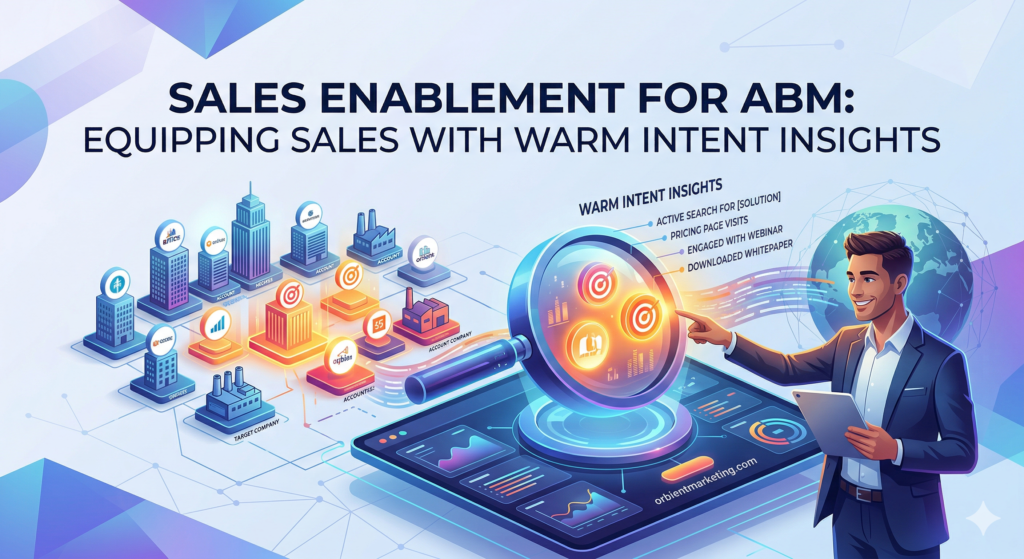
- First-Party Intent: These are “high-intent” actions on your own website. Think: visiting the pricing page, spending three minutes on a case study, or using an ROI calculator.
- Third-Party Intent: These are “interest” signals from around the web. For example, if a target account is searching for “Scalable ABM tactics for mid-market” on a third-party review site like G2 or TrustRadius.
The Enablement Task: Create an “Intent Cheat Sheet” for Sales. Define what each signal means and provide a specific talk track for each. If they see “Third-Party Research” on a competitor, the talk track should be: “I’ve noticed many companies in [Industry] are frustrated with [Competitor’s Flaw]. Is that something your team is navigating?”
2. Delivering Insights Where Sales Lives
The #1 rule of sales enablement: Do not make Sales log into a new platform. If your intent insights are hidden in an ABM platform like Terminus or Demandbase, Sales will ignore them. To equip reps effectively:
- CRM Integration: Push intent scores and “recent keywords” directly into the Salesforce or HubSpot Account view.
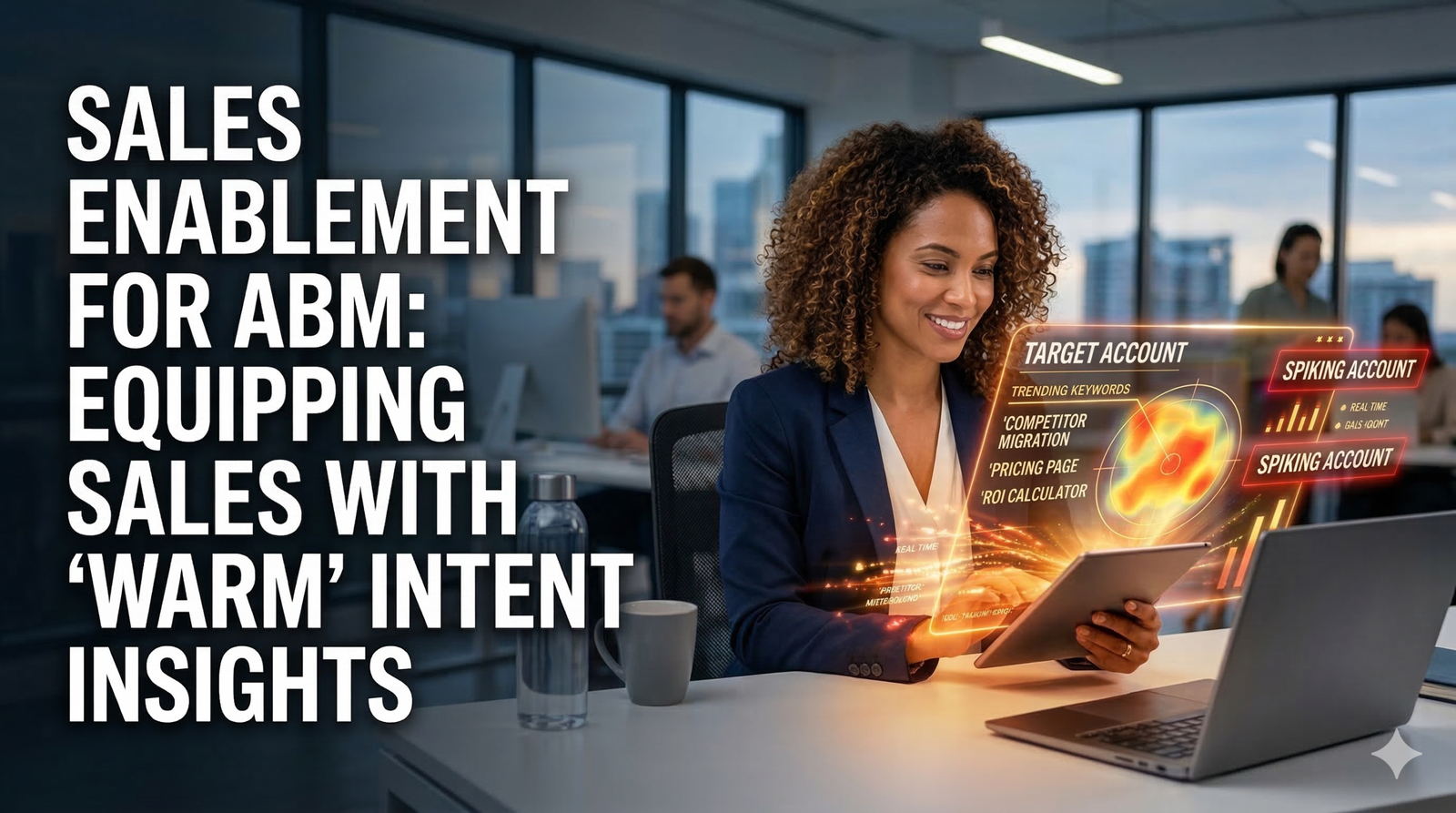
- Slack/Teams Alerts: Set up real-time notifications for “Spiking Accounts.” When a Tier 1 prospect engages with a high-value asset, the rep should get a ping immediately.
- Weekly “Intelligence Briefs”: Marketing should send a 5-minute Monday morning video or email highlighting the top 5 “Warmest” accounts of the week and why they are hot.
3. Personalized Account Plays: From Insight to Outreach
Intent data is useless if it doesn’t change the outreach. Sales enablement should provide personalized account plays B2B reps can deploy the moment an account “warms up.”
The “Spiking Account” Play
When an account shows a sudden surge in research activity:
- Marketing Action: Increase ad frequency for that specific account to provide “Air Cover.”
- Sales Action: Drop a personalized video (via Vidyard or Loom) mentioning the specific topic the account is researching.
The “Competitor Conquest” Play
When intent data shows an account is researching a direct competitor:
- Marketing Action: Serve ads highlighting your “Killer Feature” that the competitor lacks.
- Sales Action: Send a “Battlecard” or a 1-page comparison guide specifically designed for that account’s industry.
4. Scalable ABM Tactics for Mid-Market Enablement
Enablement often focuses on the “Big Fish” (Tier 1), but your mid-market reps need love too. Since they handle more volume, they need scalable ABM tactics for mid-market accounts that don’t require 10 hours of research.
- Content “Snack Packs”: Provide Sales with a library of 30-second “Insight Bites”—short, pre-written snippets they can drop into LinkedIn InMails or emails based on specific intent triggers.
- Automated Nurture Hand-off: Create a “Sales-to-Marketing” loop where Sales can “tag” an account in the CRM to receive a specific marketing-led nurture track based on their current stage in the buying journey.
5. The “Closing the Loop” Meeting
Alignment is a two-way street. Every two weeks, hold a “Revenue Intelligence” session.
- Marketing asks: “Did the intent data we sent on Account X actually match your conversation?”
- Sales shares: “The intent said they wanted ‘Security,’ but they actually care about ‘Ease of Use.’ Let’s adjust our keyword tracking.”
This feedback loop ensures that your B2B account selection criteria and intent triggers are constantly getting sharper.
Conclusion: Turning Insight into Income
Sales enablement for ABM is about removing the guesswork. When you equip your reps with “warm” intent insights, you move them from “Cold Callers” to “Consultative Partners.” They stop guessing what the prospect wants and start providing exactly what they need at the precise moment they need it.
When Sales and Marketing are unified by data, the results aren’t just better—they’re predictable.