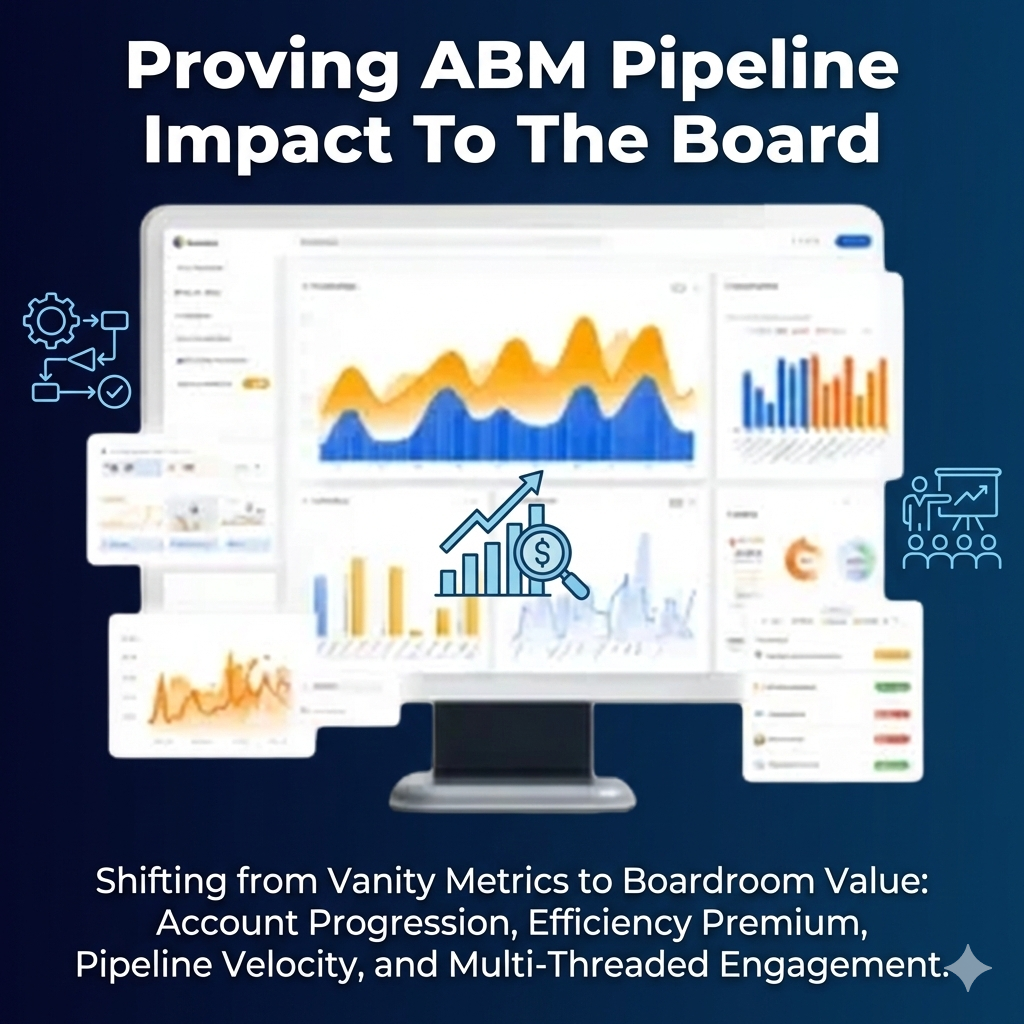
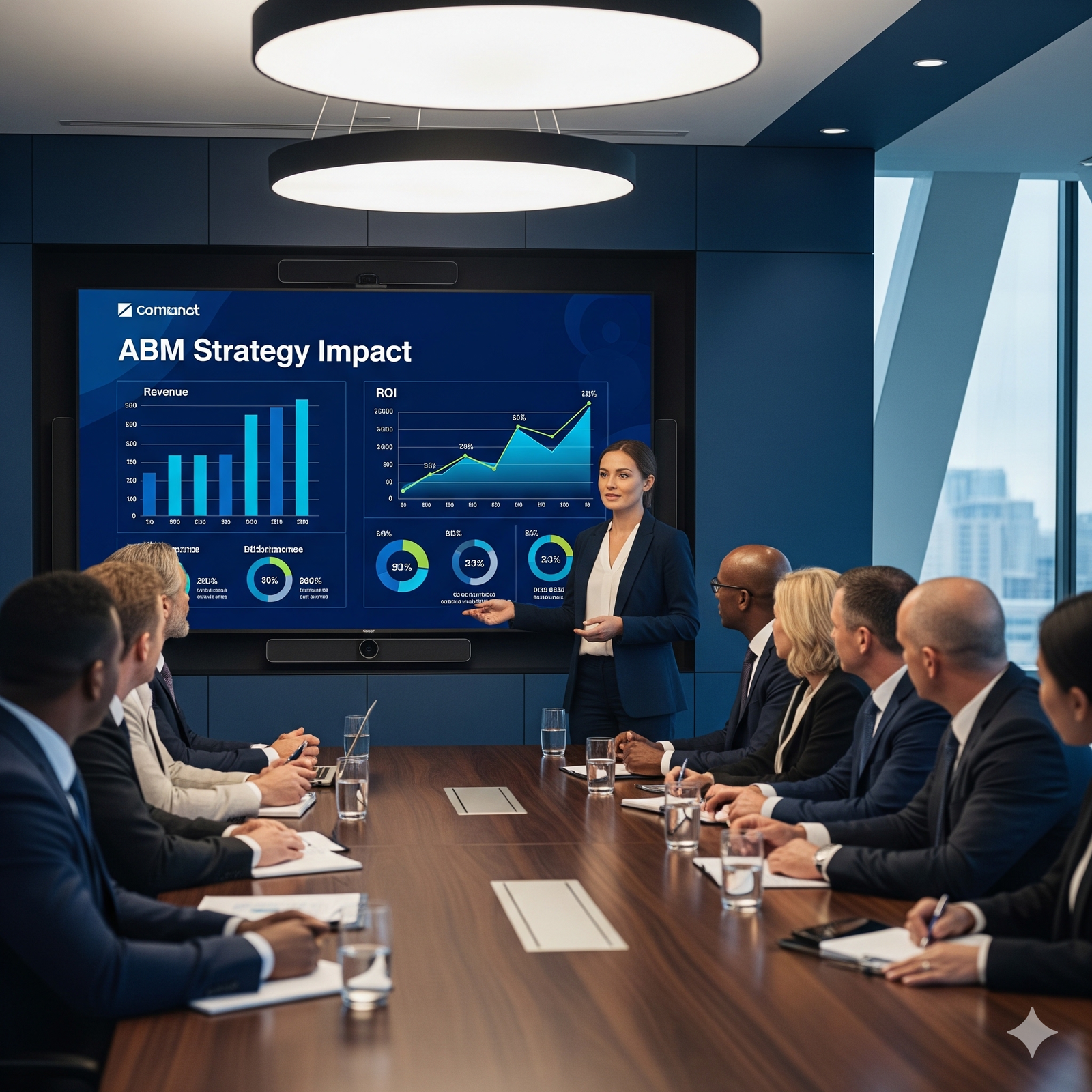
Your pillar strategy—The 95-5 Rule in B2B—highlights a painful reality: at any given moment, 95% of your target accounts aren’t ready to buy. When you present to the Board of Directors, they often only care about the 5% that are.
To bridge the gap between long-term brand building and immediate ROI, you need a reporting framework that proves ABM isn’t just “expensive lead gen,” but a precision tool for enterprise growth.
1. Shift from “Leads” to “Account Progression”
In a standard demand generation model, more leads usually equal more revenue. In ABM, you are fishing in a smaller, predefined pond. If you report a “drop in lead volume,” the Board might panic—unless you show them Account Progression.
- The Metric: Percentage of Target Accounts moving from Awareness to High Intent.
- The Narrative: “We aren’t generating 1,000 random leads; we are moving 40 of our highest-value accounts closer to a $1M deal”.
2. Prove the “Efficiency Premium” (ABM vs. Demand Gen)
The Board loves a comparative advantage. Use your data to show that while ABM might have a higher Cost Per Lead (CPL), it delivers a significantly higher Return on Ad Spend (ROAS) at the bottom of the funnel.
| Metric | Traditional Demand Gen | Account-Based Marketing (ABM) |
| Average Deal Size | $25,000 | $120,000 |
| Win Rate | 12% | 28% |
| Sales Cycle Length | 9 Months | 6 Months |
Board-ready takeaway: “By focusing on the 95-5 rule, we’ve stopped wasting 90% of our budget on accounts that will never close, resulting in a 2x increase in average contract value (ACV)“.
3. Use “Pipeline Velocity” as Your North Star
One of the most common reasons ABM strategies fail is the “waiting game”. To keep the Board’s confidence during long enterprise cycles, report on Pipeline Velocity.

If your ABM efforts are shortening the time an account spends in the “Qualified” stage, you are literally making the company money faster. That is a metric every CFO understands.
4. Showcase Multi-Threaded Engagement
The Board knows that in enterprise B2B, one person doesn’t make a decision; a committee of 6–10 stakeholders does.
- The Heat Map: Show that you’ve moved from a single contact (the “Champion”) to active engagement from the CFO, CTO, and VP of Operations.
- Risk Mitigation: An account with five engaged stakeholders is significantly more likely to close than one with a single point of failure.
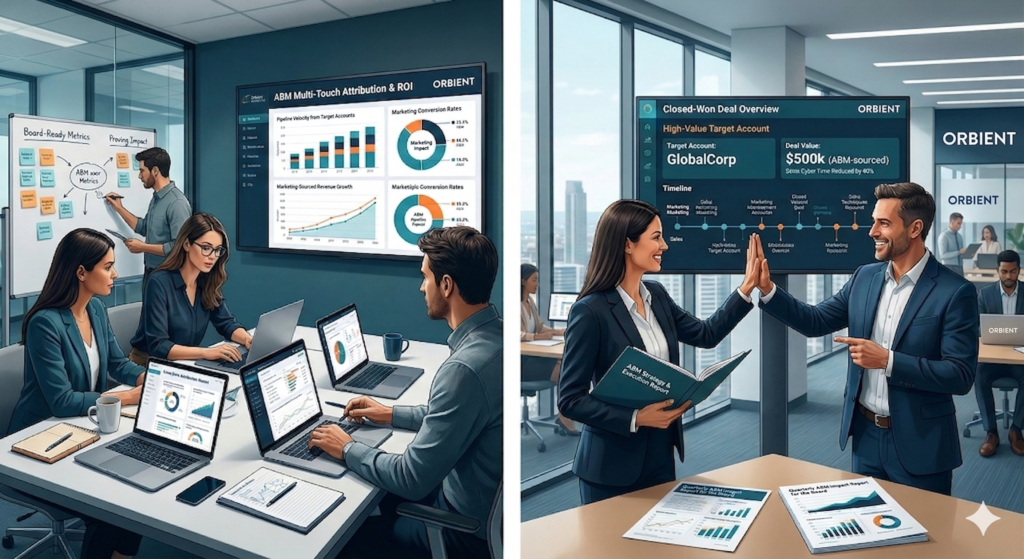
Pro Tip: Use real-world examples. Instead of just showing graphs, show a “Path to Purchase” timeline for a recent closed-won deal, highlighting every ABM touchpoint that influenced the decision-makers.
5. Address the 95%: The “Future Demand” Pipeline
Finally, remind the Board that ABM is an insurance policy for next year’s revenue. By building brand equity with the 95% who are “out-of-market” today, you are ensuring that when they do enter the 5% buying window, your brand is the “Day One” favourite.
Don’t leave 95% of your market to your Competitors.

What Happens When Strategy Meets Precision? Results.
Learn how our tailored, tech-forward campaigns drive growth for SaaS and B2B companies. From automation to acquisition, devising strategy, engineering growth and retention we optimise every touchpoint.