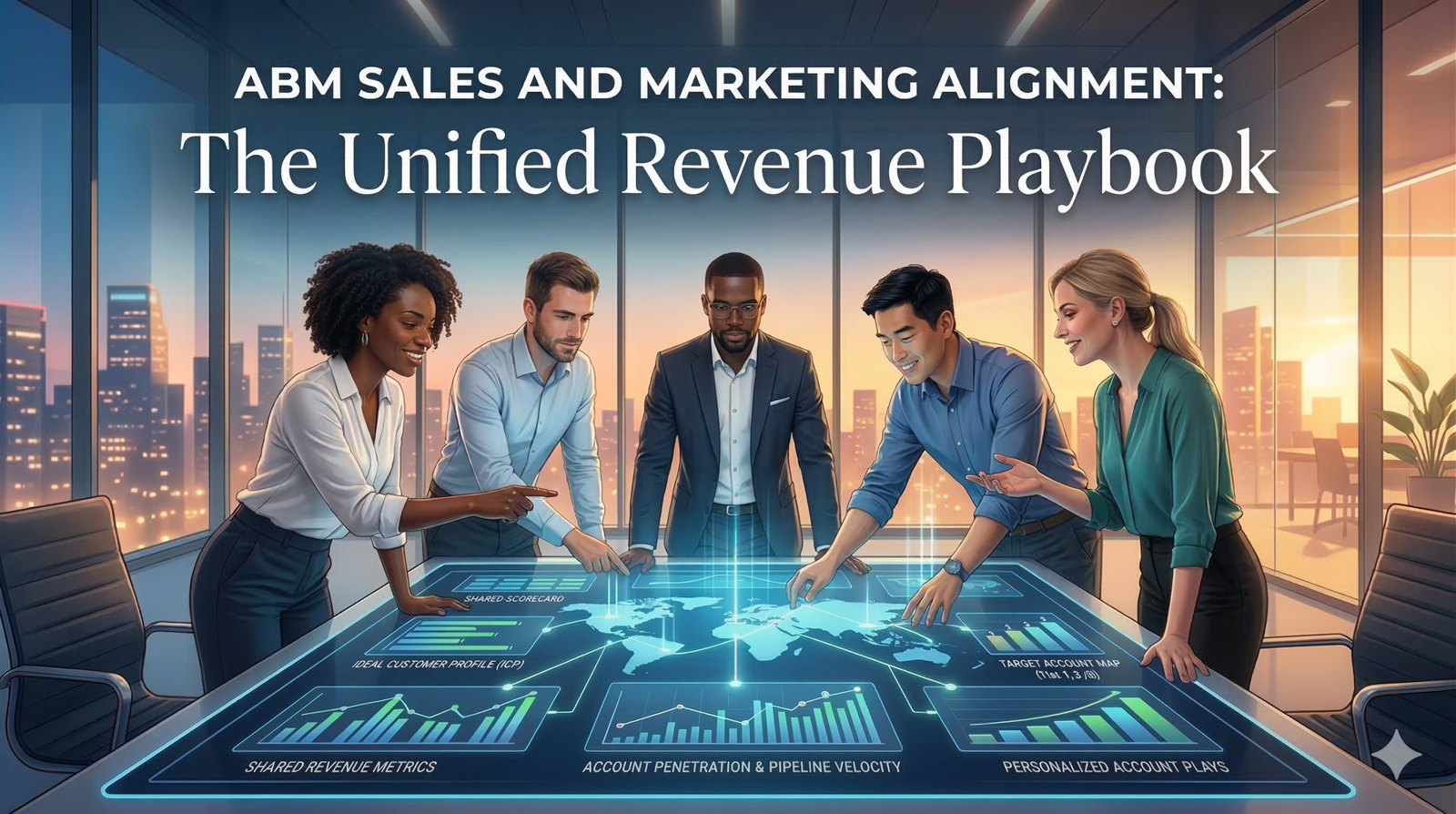
In the traditional B2B model, Marketing and Sales often operate like two separate islands. Marketing tosses “leads” over a wall, and Sales complains that those leads are undercooked. In the world of Account-Based Marketing (ABM), that wall doesn’t just need to be lowered—it needs to be demolished.
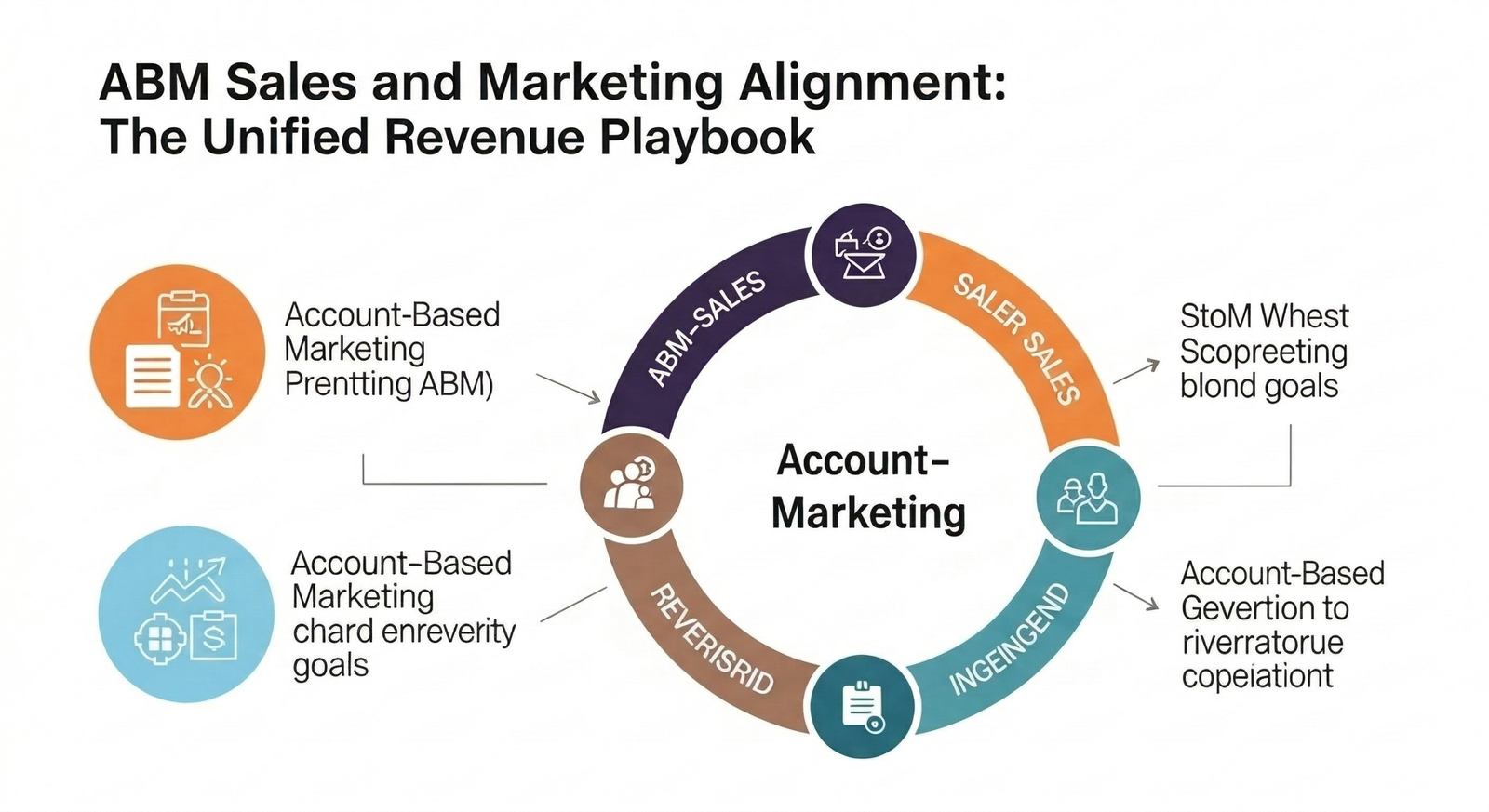
True ABM isn’t a marketing strategy; it’s a business strategy. When executed correctly, it creates a Unified Revenue Team where both departments share the same scoreboard, the same targets, and the same language. This guide explores how to build that alignment and turn your go-to-market motion into a precision-guided revenue engine.
The Foundation: Defining Your B2B Account Selection Criteria
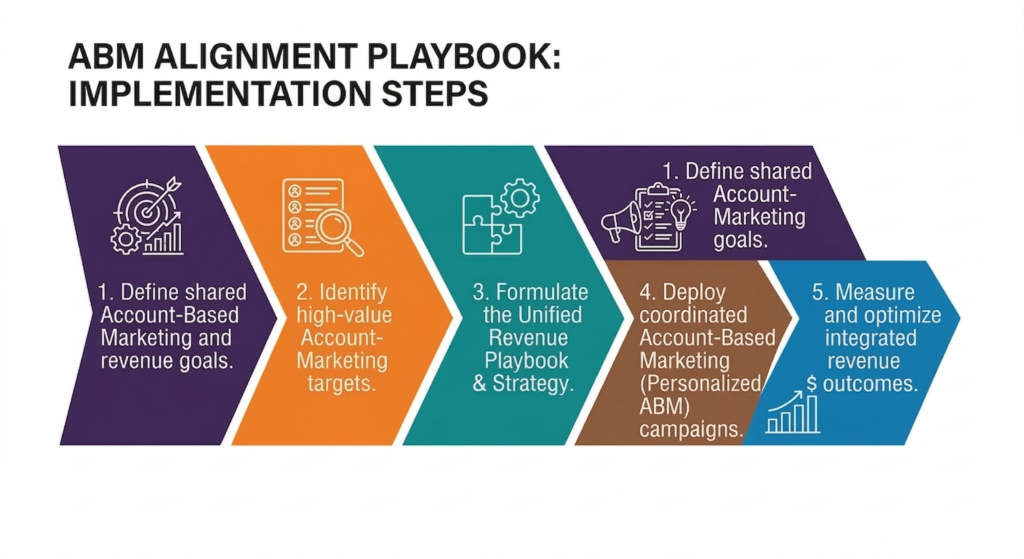
The most common point of failure in ABM is a lack of agreement on who we are chasing. If Marketing targets Fortune 500 tech firms while Sales is focusing on mid-market manufacturing, the engine stalls before it starts.
Alignment begins with a shared Ideal Customer Profile (ICP). To ensure both teams are locked in, you must define your B2B account selection criteria based on two categories:
- Firmographics & Technographics: Beyond just company size and industry, look at their tech stack. Does your solution integrate with what they already use?
- Intent & Engagement Data: Are they searching for keywords related to your solution? Have they visited your pricing page?
Pro Tip: Create a “Tiering System.” Tier 1 accounts get 1:1 bespoke attention, while Tier 2 and 3 receive more automated, yet still highly segmented, outreach.
Building the Unified Playbook
Once the targets are set, you need a coordinated game plan. This is where the “Unified Revenue Playbook” comes into play. It dictates who does what, and when.
1. Shared Revenue Metrics
Stop measuring Marketing on “MQLs” (Marketing Qualified Leads) and Sales on “Calls Made.” Instead, align them on:
- Account Penetration: How many stakeholders within a target account have we reached?
- Pipeline Velocity: How fast are target accounts moving through the funnel?
- Average Contract Value (ACV): Are we winning bigger deals by focusing on higher-value accounts?
2. Personalized Account Plays in B2B
Personalization in ABM isn’t just about putting a logo on a slide deck. It’s about contextual relevance.
- Marketing’s Role: Build custom landing pages, run hyper-targeted LinkedIn ads for the C-suite, and provide air cover with industry-specific thought leadership.
- Sales’ Role: Use the insights gathered by Marketing to craft “Point of View” (POV) outreach. If Marketing sees an account is interested in “Cybersecurity Compliance,” Sales should lead their next call with a case study on that exact topic.
Scalable ABM Tactics for Mid-Market
A common misconception is that ABM only works for “whale hunting” enterprise deals. However, you can implement scalable ABM tactics for mid-market accounts by using a “One-to-Many” or “One-to-Few” approach.
- Cluster Campaigning: Group 10–15 mid-market accounts by a shared pain point (e.g., “Scaling Remote Teams”) and run a coordinated campaign for that specific cluster.
- Automated Direct Mail: Use platforms like Sendoso or Alyce to trigger physical gifts or handwritten notes when a mid-market prospect reaches a certain engagement threshold.
- LinkedIn Sales Navigator Integration: Ensure your CRM feeds marketing engagement data directly to sales reps so they know exactly when to strike.
Bridging the Gap: The “Smarketing” Feedback Loop
Alignment isn’t a “set it and forget it” task. It requires a continuous feedback loop.
- Weekly Stand-ups: Hold a 20-minute “Revenue Sync” where Sales shares the objections they’re hearing on calls, and Marketing shares which content is getting the most “clicks” from target accounts.
- Content Collaboration: Sales is on the front lines. They know the questions prospects ask. Marketing should use those questions to create the next round of sales enablement assets.
From Stalled to Closed: Moving the Needle
Even with perfect alignment, accounts can get stuck. This is often where the handoff gets messy. To keep the momentum, you need specific strategies to revive “zombie” accounts.
When a high-value opportunity stops responding, it’s usually because the perceived risk of change outweighs the perceived value of your solution. This requires a shift from “checking in” to “adding value.”
Related Reading: If you’re struggling with accounts that have gone dark, check out our tactical guide:5 High-Value Account Plays for Stalled Opportunities.
Conclusion: One Team, One Goal
ABM sales and marketing alignment isn’t just a “nice-to-have”—it’s the only way to win in a crowded B2B landscape. By refining your B2B account selection criteria, deploying personalized account plays, and leveraging scalable tactics, you transform your departments from siloed functions into a unified force.
When Sales and Marketing speak the same language, the customer feels it. And when the customer feels understood, the revenue follows.