Executive Summary
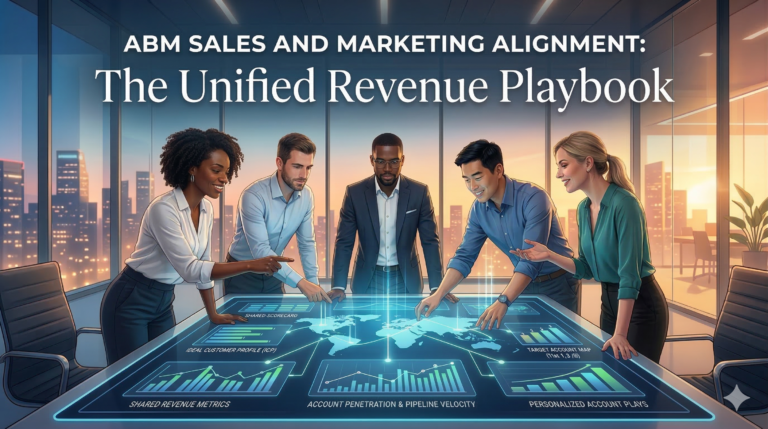
B2B marketing is evolving rapidly. Buyers expect personalisation, seamless engagement, and timely interactions across multiple channels. To meet these demands, businesses must integrate Account-Based Marketing (ABM), marketing automation, and persona-driven content strategies.
This whitepaper presents a framework for B2B marketers to:
- Identify high-value target accounts using data-driven insights.
- Develop personas that guide content creation and messaging.
- Deliver personalised campaigns at scale using marketing automation.
- Align sales and marketing for cohesive execution and maximised ROI.
- Learn from case studies highlighting best practices in ABM and automation.
By combining these strategies, organisations can build predictable pipelines, increase engagement, and demonstrate measurable business impact.
1. The Shift to Account-Based Marketing
From Broad to Targeted Marketing
Traditional B2B marketing relied on broad campaigns and high-volume lead generation. ABM flips this model: it focuses on high-value accounts, delivering personalised messages that resonate with key stakeholders.
Benefits of ABM:
- Directly engages decision-makers.
- Reduces wasted spend on uninterested leads.
- Enables long-term relationship building with strategic accounts.
Practical Case Study:
A technology solutions provider targeted 50 top-tier enterprises in the finance sector using ABM. By mapping key decision-makers and delivering personalised content, they increased qualified leads by 45% in six months.

2. Persona Development for Precision Targeting
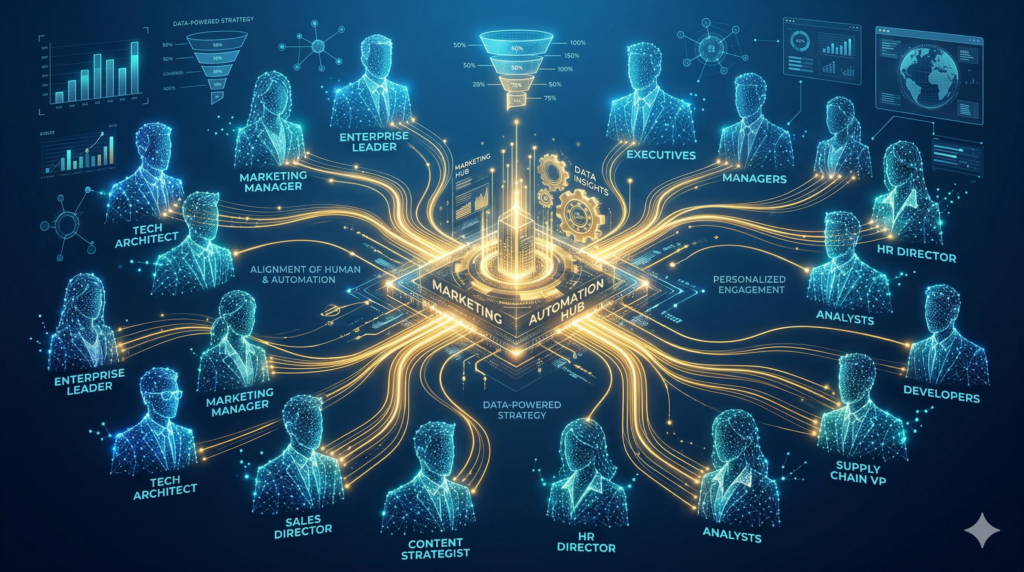
Successful ABM campaigns require understanding who you are marketing to. This is where persona development comes in:
Steps to Build Effective Personas:
- Identify Stakeholder Roles: C-level executives, department heads, and key influencers.
- Assess Pain Points and Motivations: What challenges keep them awake at night? What outcomes do they prioritise?
- Determine Preferred Channels: Do they respond better to LinkedIn, email, webinars, or in-person events?
- Tailor Messaging and Content: Personalise communication based on role, industry, and specific needs.
Example Persona:
- Name: Finance Fiona
- Role: CFO of a mid-sized enterprise
- Pain Points: Optimising operational costs, compliance, and risk management
- Preferred Content: ROI calculators, industry benchmarks, and case studies
Practical Case Study:
A SaaS firm developed personas for IT, finance, and marketing leaders in target accounts. By aligning content to these personas, they improved engagement rates by 60% and reduced sales cycles by 20%.
3. Building Your Target Account List
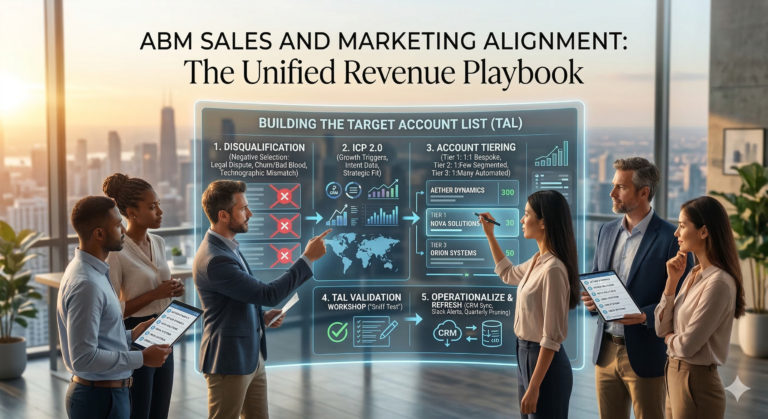
Once personas are established, you need to identify the right accounts.
Steps for Account Selection:
- Evaluate Market Potential: Company size, revenue, growth potential, and strategic importance.
- Use Intent Data: Identify companies showing interest in relevant topics online.
- Maintain Data Accuracy: Regular account mapping ensures correct contact information for all stakeholders.
- Define Touchpoints: Determine where and how to engage each decision-maker meaningfully.
Example:
A manufacturing firm used intent data to identify accounts researching production optimisation. They delivered a tailored webinar invite and follow-up case studies, generating a 35% increase in qualified leads.
4. Personalised Content Strategy
Content remains at the core of ABM: it must speak directly to the persona and account.
Types of Personalised Content:
- Case Studies: Highlighting similar companies’ successes.
- Whitepapers and eBooks: Addressing specific industry challenges.
- Custom Landing Pages: Featuring account-specific messaging and visual branding.
- Interactive Tools: ROI calculators, assessment quizzes, or benchmarking tools.
Best Practices:
- Integrate the account’s name/logo when possible.
- Use terminology aligned with the persona’s vocabulary.
- Limit outreach frequency; consider digital ad frequency capping to avoid fatigue.
Case Study:
A B2B consultancy created a series of personalised eBooks for 20 key accounts. The result: a 50% increase in meeting bookings and stronger relationships with C-level executives.
5. Marketing Automation: Scaling Engagement
While ABM defines the strategy, marketing automation enables scale without losing personalisation.
Key Automation Capabilities:
- Automated email sequences triggered by account behaviour.
- Lead scoring and prioritisation using predictive analytics.
- Multi-channel orchestration across email, social, display, and direct mail.
- Performance measurement to continuously optimise campaigns.
Case Study:
An enterprise software company implemented automation to nurture leads in targeted accounts. Automated content delivery and follow-ups led to a 40% increase in pipeline velocity.
6. Aligning Sales and Marketing
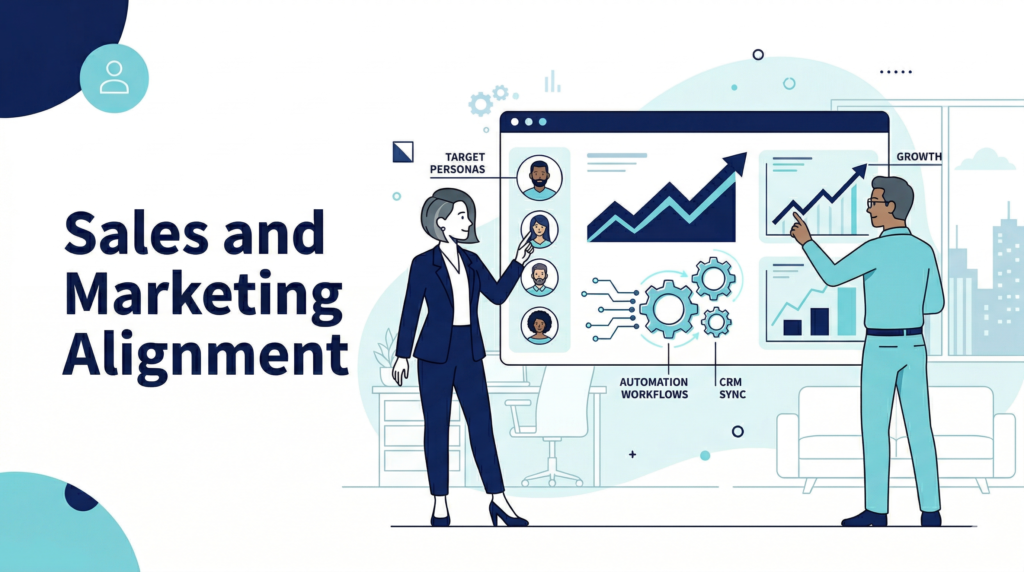
Alignment ensures ABM and automation campaigns are effective:
- Shared Account Ownership: Clarify responsibilities between sales and marketing.
- Unified KPIs: Track account engagement, pipeline progression, and revenue attribution.
- Feedback Loops: Use insights from sales to refine messaging, content, and automation workflows.
Example:
A marketing team coordinated with sales to track interactions with 100 key accounts. By adjusting automated campaigns based on sales feedback, conversion rates improved by 35%.
7. Measuring Success and Continuous Improvement
Measuring impact ensures campaigns deliver business results:
- Track engagement metrics per account: opens, clicks, downloads, and event attendance.
- Measure influence on pipeline: opportunities created, deal progression, closed revenue.
- Optimise campaigns iteratively based on performance data.
Tip: ROI may take time to fully manifest, but continuous tracking ensures learning and improvement.
Actionable Framework
- Define Accounts and Personas: Identify high-value accounts and create detailed personas.
- Develop Personalised Content: Tailor messaging and creative materials to each persona.
- Implement Marketing Automation: Use workflows and analytics to scale engagement.
- Align Sales and Marketing: Establish shared ownership, KPIs, and regular feedback.
- Measure, Optimise, Repeat: Track results at account-level and refine campaigns continuously.

Conclusion
Integrating ABM, persona-led strategies, and marketing automation allows B2B organisations to engage the right accounts with precision, scale outreach without losing personalisation, and generate measurable business impact.
By following this framework:
- Marketers can improve account engagement and accelerate pipeline growth.
- Sales teams gain clarity and efficiency through aligned strategies.
- Businesses demonstrate tangible ROI from marketing activities.
Incorporating personas and learning from practical case studies ensures campaigns are not only effective but sustainable, measurable, and scalable, creating a clear competitive advantage in B2B marketing.