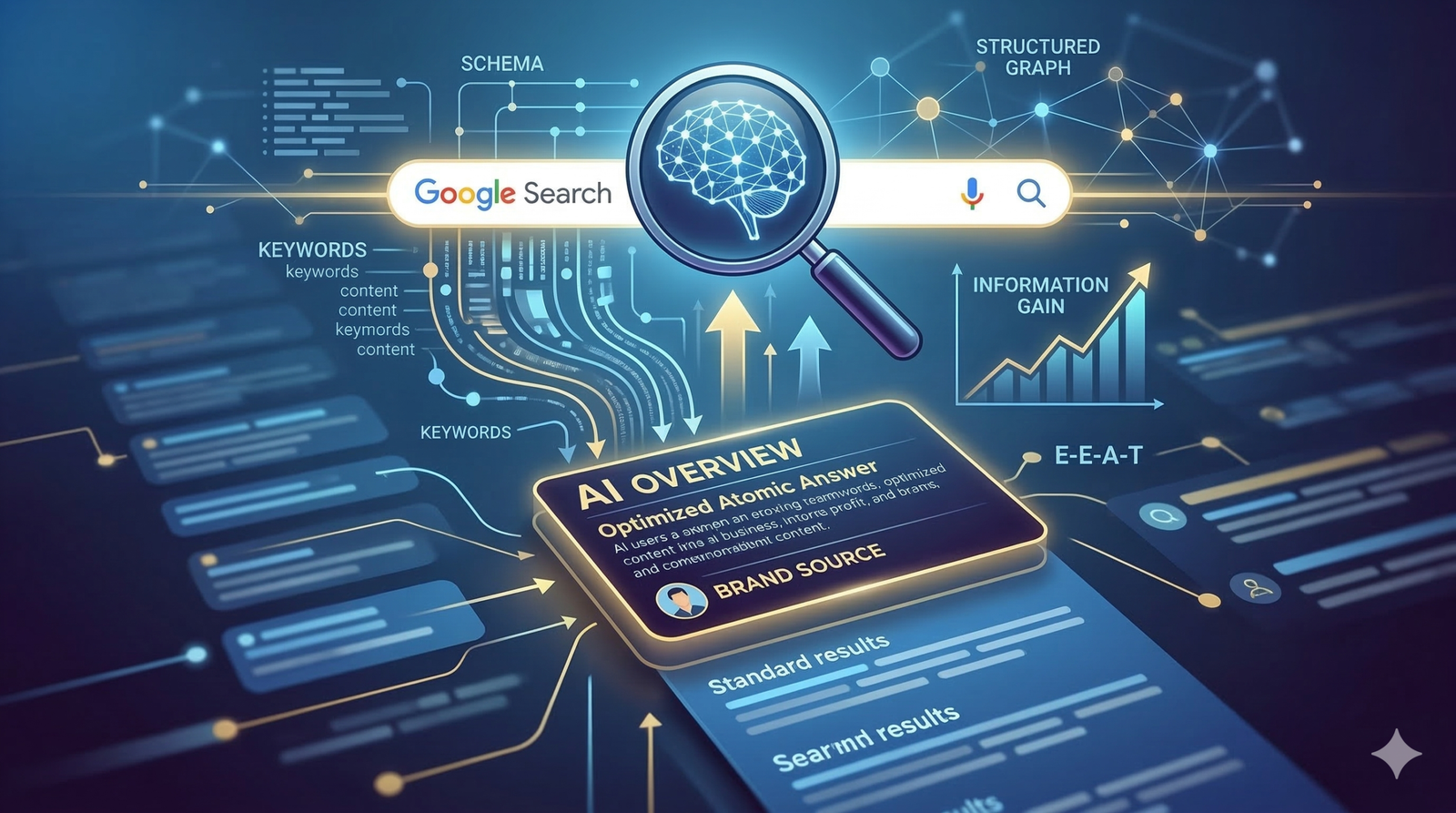
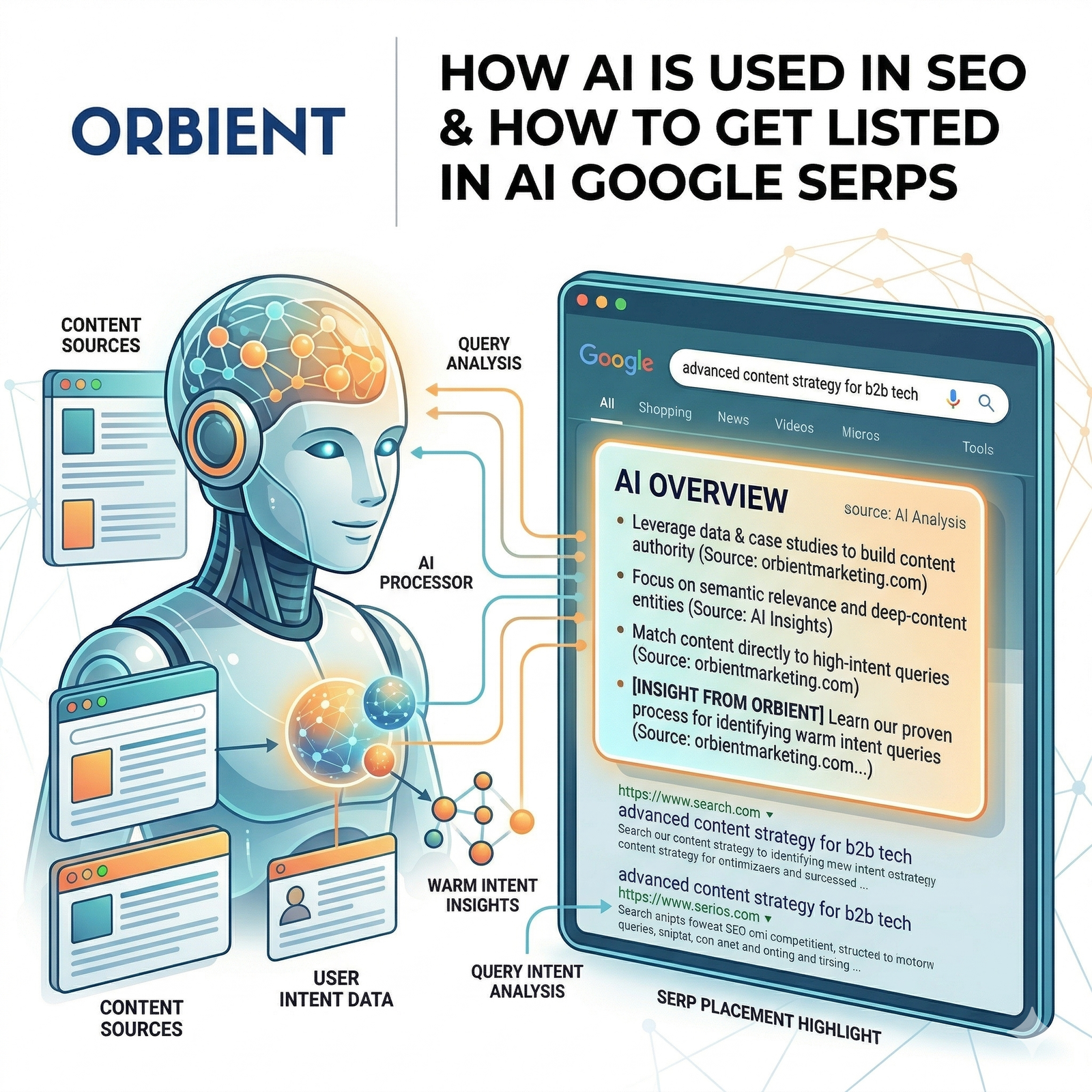
In 2026, SEO is no longer just about “ranking in blue links.” It has evolved into Generative Engine Optimisation (GEO)—the practice of ensuring your brand is the primary source cited by AI models like Google’s Gemini and Search Generative Experience (SGE).
AI hasn’t killed SEO; it has raised the bar from “keyword matching” to “intent satisfaction.”
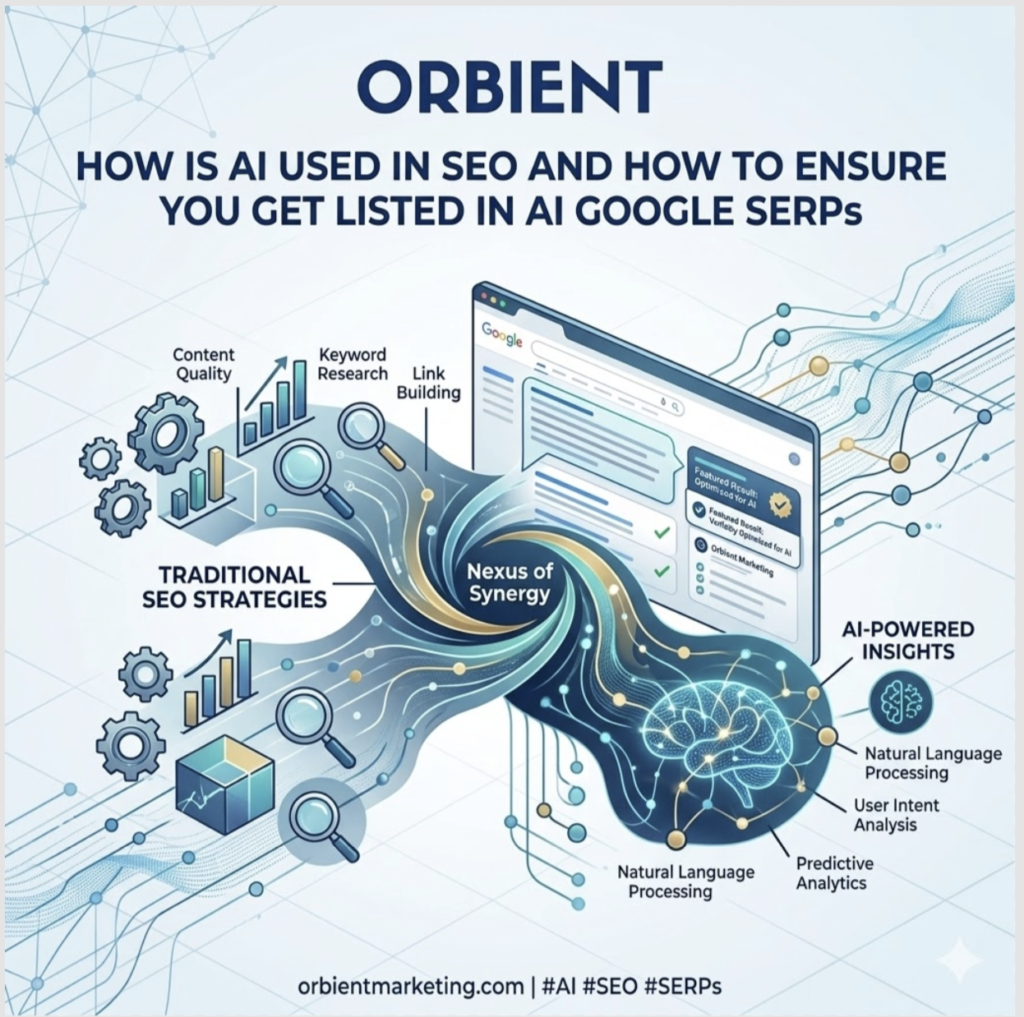
1. How AI is Used in SEO Today
AI is now the backbone of both search engine algorithms and the tools marketers use to compete.
- Intent Interpretation: Google uses Natural Language Processing (NLP) to understand the meaning behind a query. If someone searches for “best way to scale a startup,” AI recognises the intent is “business growth strategy” and filters for authoritative guides rather than just pages with those specific words.
- Automated Content At Scale: Tools use AI to draft outlines, perform initial research, and even generate first drafts. However, in 2026, unedited AI content is heavily penalised. The winners use AI for structure and humans for insight.
- Predictive Analytics: SEO platforms now use machine learning to predict which keywords will trend before they spike, based on social sentiment and news cycles.
- Technical Health: AI agents automatically crawl sites to find broken schema markup, redirect chains, or accessibility issues, fixing them in real-time.
2. How to Get Listed in AI Overviews
Google’s AI Overviews (formerly SGE) pull information from a few select “seed” sources. To be one of those sources, you must make your content extractable and authoritative.
A. The “Atomic Answer” Framework
AI Overviews prioritize content that provides a direct answer in a digestible block.
- Lead with the Answer: Place a concise 40–60 word summary immediately below your main H1 or H2 heading.
- Question-Based Headers: Use headers like “How do I [Problem]?” instead of generic titles like “Our Solutions.” This helps the AI match your section to a user’s conversational query.
B. Prioritise “Information Gain”
Google’s 2026 algorithms reward “High-Gain” content—information that doesn’t exist anywhere else.
- Original Data: Include a unique statistic, a proprietary survey result, or a specific case study.
- Unique Perspective: If 10 articles say the same thing, the AI will ignore them all. If your article provides a contrarian or deeply experienced view, it is more likely to be cited as a “Source.”
C. Implement Advanced Schema Markup
AI “scans” rather than “reads.” Structured data tells the AI exactly what it’s looking at.
- FAQ & How-To Schema: These are the most powerful triggers for AI Overviews.
- Author Schema: Connect your content to a real person with verifiable credentials (links to LinkedIn, professional awards, or other publications).
D. Build “Citation Velocity”
AI systems prefer sources that are frequently mentioned across the web.
- Digital PR: Being quoted in news outlets or high-authority industry blogs acts as a “trust signal” for the AI.
- Consistent Branding: Ensure your brand name and core expertise are described identically across social media, directories, and your website.
3. Comparison: Traditional vs. AI-First SEO
| Feature | Traditional SEO | AI-First SEO (GEO) |
| Primary Goal | Rank #1 in blue links | Be the “Cited Source” in AI Summary |
| Content Style | Long-form, keyword-dense | Structured, “Atomic” answers |
| Key Metric | Click-Through Rate (CTR) | Brand Impressions & Citations |
| Trust Signal | Backlinks | E-E-A-T & Entity Authority |
The Bottom Line
In 2026, the goal isn’t just to be found—it’s to be trusted. When you optimize for the AI’s need for clarity and the user’s need for unique insight, you move beyond “gaming the system” and start building a brand that the algorithms can’t help but recommend.